Concrete Slab & Foundation Work
Get a solid foundation for your new building, garage, shed, or addition with expert concrete slab installation.
Why Your Foundation Matters More Than You Think
Every building starts with its foundation. Whether you're putting up a new garage, adding a room to your house, or building a storage shed, the slab underneath is what keeps everything level and stable for decades. A poorly poured foundation leads to cracked walls, sticking doors, and expensive repairs down the road. A quality foundation, installed right the first time, gives you peace of mind and protects your investment.
We've poured foundation slabs throughout Benton for residential and commercial projects of all sizes. From small equipment pads to full house foundations, we follow the same careful process every time. We test the soil, prepare the ground properly, install reinforcement where it's needed, and pour quality concrete to exact specifications. These steps take time, but they're what separate a foundation that lasts from one that causes problems.
Benton's clay-heavy soil and seasonal weather patterns create unique challenges for concrete work. Soil that shifts with moisture changes can cause settling and cracking if not properly addressed. That's why we pay close attention to site conditions and adjust our approach based on what your specific property needs. Proper drainage, adequate base material, and correct slab thickness all factor into creating a foundation that performs well in local conditions.
Types of Concrete Slabs We Install
Different projects need different foundation approaches. Here are the most common types of concrete slabs we install for Benton area properties:
Common Slab Applications
- •Garage and shop floors: We pour level, durable slabs designed to handle vehicle weight and heavy equipment. Proper thickness and reinforcement ensure your garage floor won't crack under daily use.
- •Home additions: Adding a room or expanding your living space? We pour foundations that match your existing structure and meet local building codes.
- •Storage buildings and sheds: Even small structures need solid foundations to prevent shifting and settling. We size the slab correctly for your building's footprint.
- •Equipment pads: HVAC units, generators, and other equipment perform better and last longer when mounted on level concrete pads with proper drainage.
- •New home foundations: We work with builders and homeowners on slab-on-grade foundations for new construction, following engineered specifications and local code requirements.
Each type of slab has specific requirements for thickness, reinforcement, and preparation. During your estimate, we'll discuss what your project needs and explain why certain specifications matter. We want you to understand what you're paying for and why it's important for long-term performance.
Our Foundation Installation Process
Quality foundation work starts long before we pour concrete. Here's what goes into every slab we install:
Site evaluation and planning: We assess your property's soil conditions, drainage patterns, and existing grade. This tells us what preparation work is needed and helps us spot potential problems before they become expensive issues.
Excavation and grading: We dig to the proper depth, remove unsuitable soil, and create the correct grade for your slab. If your soil is unstable or has high clay content, we may recommend additional base material or other solutions to prevent future settling.
Base preparation: We install and compact a gravel base layer that provides drainage and a stable platform for your concrete. This step is critical in Benton because it helps manage moisture and prevents the slab from shifting with soil movement.
Vapor barrier and insulation: For interior slabs like garage floors, we install vapor barriers to prevent moisture from wicking up through the concrete. Insulation may be added for heated spaces or to meet energy code requirements.
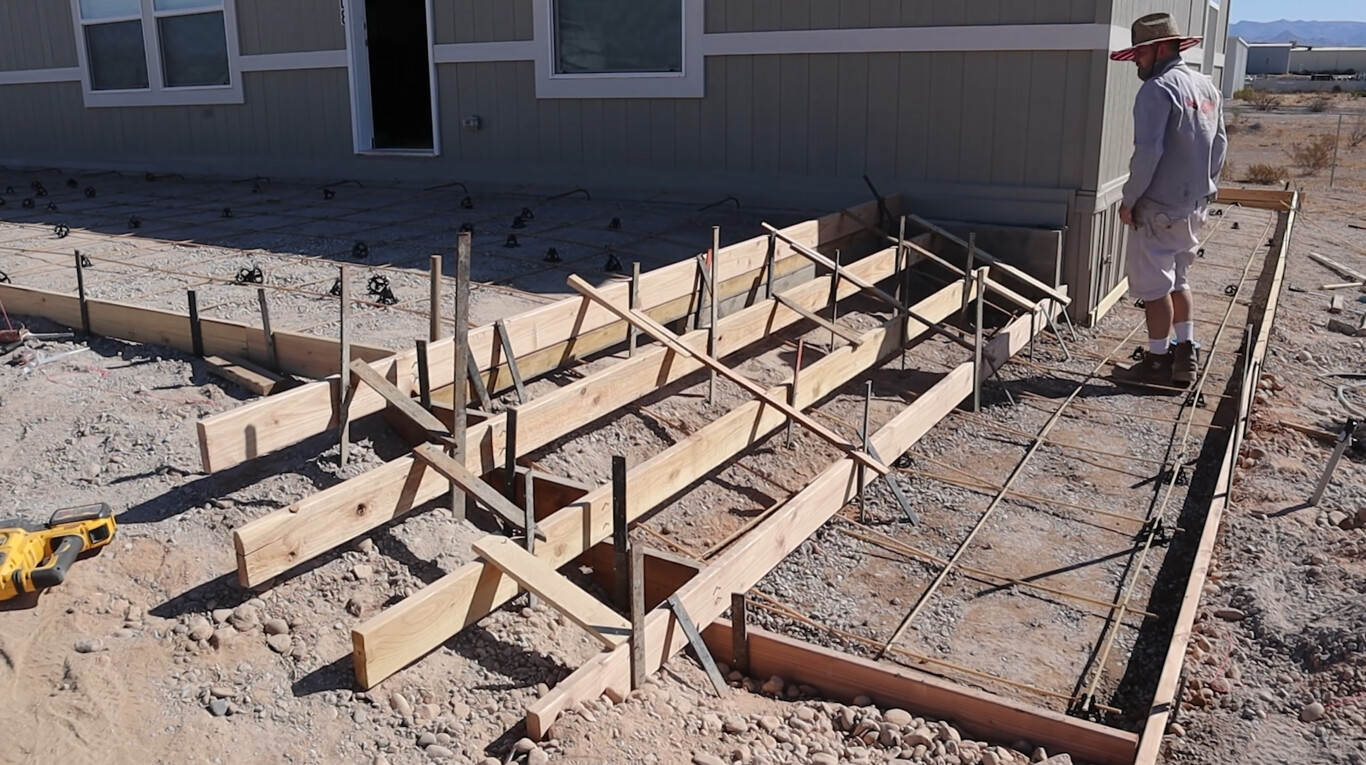
Forms and reinforcement: We build precise forms to define your slab's dimensions and install rebar or wire mesh reinforcement according to engineering specifications. Proper reinforcement prevents cracking and adds structural integrity.
Concrete pour and finishing: We pour quality concrete mix in the correct thickness for your application, consolidate it properly to eliminate voids, and finish the surface to your needs. Whether you need a smooth finish, broom texture, or specific slope for drainage, we execute it precisely.
Timeline varies based on project size and weather conditions. Most residential slabs take 3 to 7 days from excavation to final finish. After pouring, concrete needs time to cure before you can build on it or use it for heavy loads. We'll provide a detailed schedule and curing instructions specific to your project.
Common Questions About Concrete Slabs
Need a Foundation for Your Project?
Contact us for a free estimate. We'll visit your site, discuss your needs, and provide a detailed quote for your concrete foundation work.
(501) 381-3996